

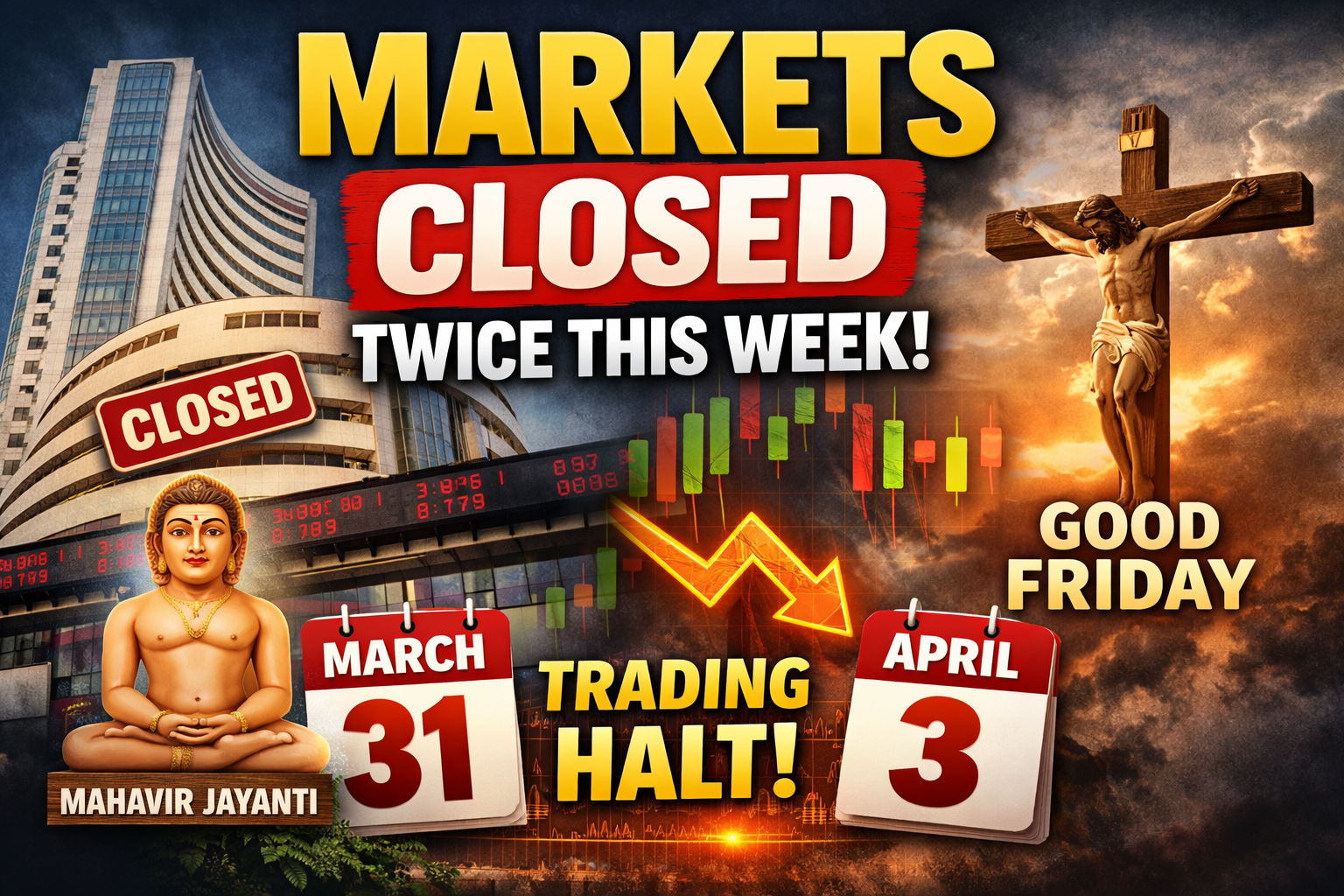
India’s stock markets are heading into a shortened trading week, with exchanges set to remain closed on two separate occasions due to upcoming holidays. Investors and traders are being advised to plan their moves carefully as market activity will be limited.
The first closure will take place on March 31, 2026, on account of Mahavir Jayanti, a significant religious festival. Later in the same week, markets will again remain shut on April 3, 2026, in observance of Good Friday.
Because of these two non-trading days, the stock market will function only for three sessions during the week, making it crucial for investors to adjust their strategies accordingly.
Holiday Impact on Trading
Both the National Stock Exchange (NSE) and the Bombay Stock Exchange (BSE) will remain closed on these dates, meaning no trading will occur in equities, derivatives, or currency segments.
Additionally, the commodity market will see partial disruption. While trading may continue in select sessions on Mahavir Jayanti, it will be completely halted on Good Friday.
What Investors Should Keep in Mind
With fewer trading days, market volatility could increase due to compressed activity. Experts suggest that investors:
- Avoid aggressive short-term trades
- Monitor global cues closely
- Plan entries and exits in advance
A holiday-shortened week often leads to reduced liquidity, which can amplify price swings.
Bigger Picture
March has already seen multiple market holidays due to festivals like Holi and Ram Navami, and these latest closures add to the trend of intermittent trading breaks.
As the financial year-end approaches, such disruptions can also influence portfolio rebalancing and institutional activity.
Reference is taken from here